Abstract
Historically, spring has been acknowledged as a time of emerging growth, insight, and transformation in many cultural traditions. Themes of growth and renewal are central to the Ancient Mystery Schools and Freemasonry, focusing on self-mastery, constituting spiritual rebirth, moral cleansing, and discipline. This paper analyzes how the ancient rites of initiatory practices, the spring season, and Masonic teachings interact to provide an extensive map of the stages of spiritual growth. Drawing from Egyptian, Greek, Mithraic, and Masonic traditions, we will explore how a central concept of renewal emerges as a dominant feature of a seeker’s path toward enlightenment.
Introduction: The Symbolism of Renewal
Spring has been universally recognized as a season of transformation and new beginnings. It signifies the victory of light over darkness and the renewal of life after the dead of winter. Across many cultures, this renewal is not only observed in nature but is also reflected in the spiritual and initiatory traditions of humanity, both ancient and modern. The Ancient Mystery Schools and Freemasonry share a common theme of renewal, using the phenomena of nature and astronomical cycles as metaphors for teaching lessons of spiritual development and inner purification.
In this study, we explore how spring, as a season of regeneration and enlightenment, is deeply embedded in ancient esoteric traditions and Freemasonry. The rites of Egyptian, Eleusinian, and Mithraic mysteries parallel the Masonic journey, all leading the initiate through a process of death, rebirth, and illumination. This paper demonstrates that the cycle of renewal found in these traditions provides a powerful framework for personal transformation.
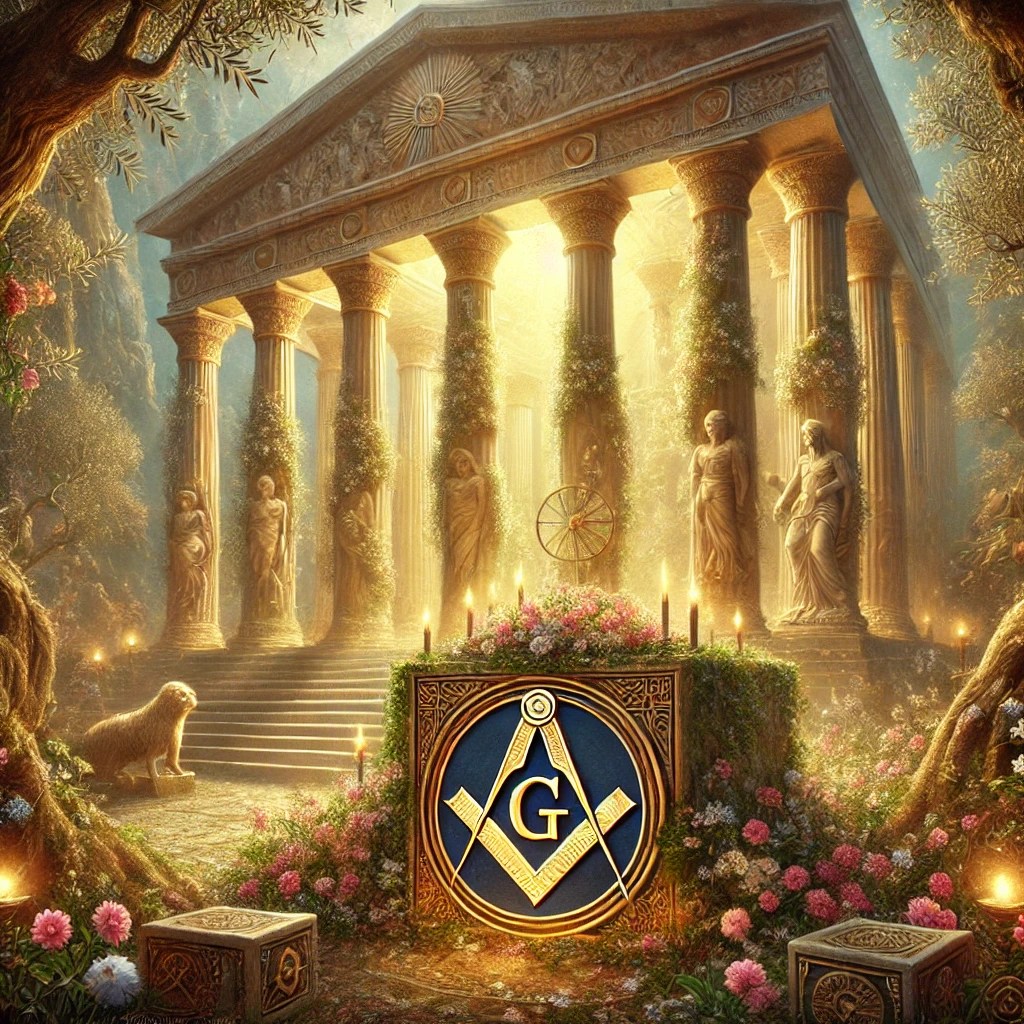
Spring Renewal in the Ancient Mystery Schools
The Egyptian Mysteries: Osiris and the Cycle of Resurrection
One of the most well-known resurrection myths is that of Osiris, the Egyptian god and judge of the underworld, agriculture, and eternal life. According to the mythology, Osiris was betrayed and murdered by his brother Set, and his body scattered across Egypt. His wife and sister, Isis, gathered the pieces of his body (except one part) and resurrected Osiris long enough to conceive their son, Horus, who would later defeat Set and restore order.
Osiris, like the renewal of spring, represents an eternal cycle of life, death, and rebirth. His death and resurrection were reflected in the rituals of the Egyptian Mysteries, where initiates were subjected to symbolic death and resurrection or rebirth to communicate lessons of shifting their focus from the profane to the sacred. This theme of regeneration and enlightenment echoes the teachings of Freemasonry, where initiates symbolically pass through trials & degrees before being “raised” to new light.
The Eleusinian Mysteries: Persephone and the Return of Light
The Eleusinian Mysteries of ancient Greece were centered around the myth of Demeter and Persephone. Persephone, the daughter of Demeter, and goddess of the Underworld and springtime, was abducted by Hades and taken to the underworld to be his wife. In her mother’s grief, the earth was plunged into barrenness. However, upon Persephone’s return each year, spring blossomed once more due to her mother’s happiness of her return.
This story, celebrated through initiatory rites, symbolized the soul’s descent into darkness and reemergence into the light. Like the Egyptian Mysteries, those who partook in the Eleusinian Mysteries were said to go through a spiritual rebirth, experiencing a profound transformation of consciousness. Similarly, Freemasonry teaches that the initiate must undergo trials of darkness, or shadow work as Carl Jung would call it, before reaching the Light of the East, the symbolic land of knowledge and wisdom.
Mithraism and the Solar Cycle
Mithraism, a mystery religion popular among Roman soldiers, revolved around the figure of Mithras, a solar deity who slayed the cosmic bull to bring forth new life and fertility. This was considered an act of divine sacrifice and renewal. The Mithraic initiations were structured in seven stages, each marking a deeper level of spiritual progression, much like the degrees in Freemasonry.
The return of the sun’s strength in spring was the central event in Mithraic worship, symbolizing victory over darkness (ignorance). Just as the initiate in Mithraism ascended through seven levels of understanding, the Freemason progresses through degrees that teach moral and philosophical truths, progressively leading him toward enlightenment.
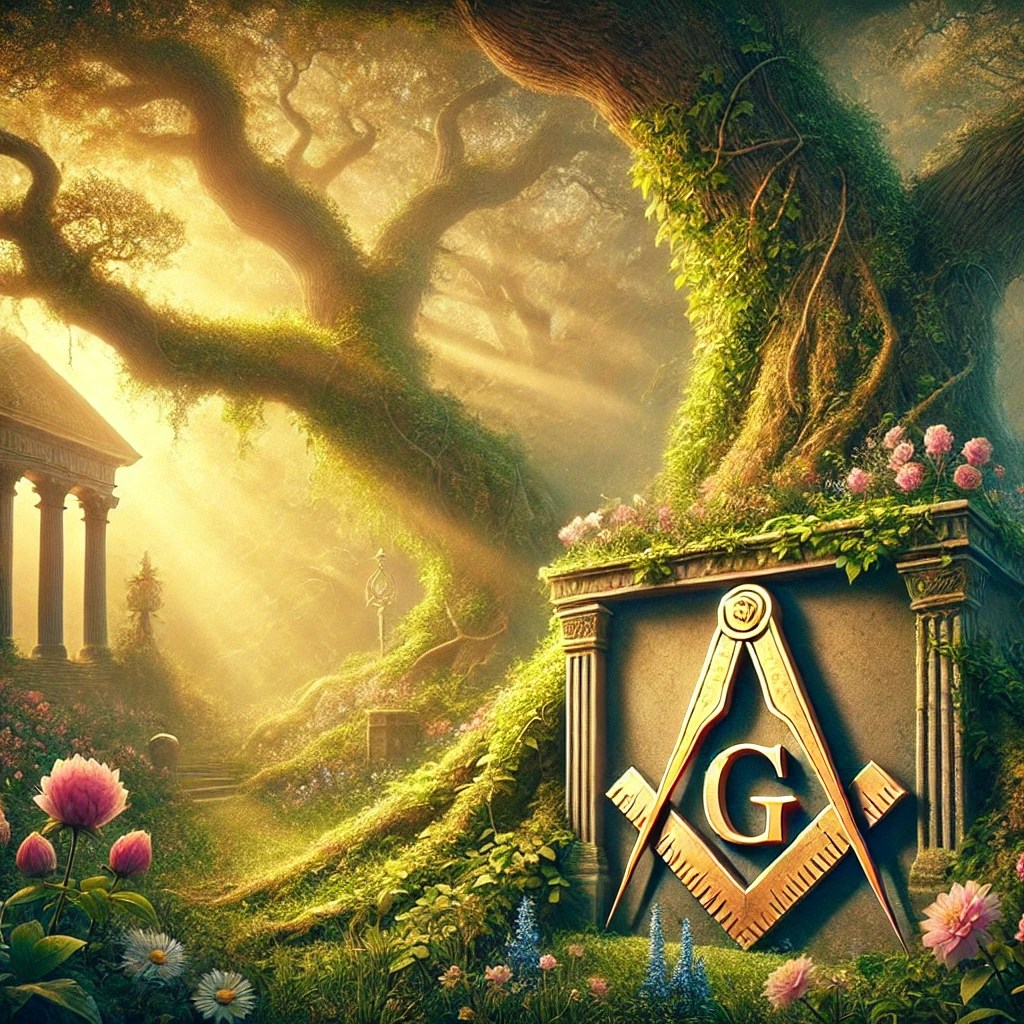
The Theme of Renewal in Freemasonry
The Masonic Journey as a Cycle of Death and Rebirth
Freemasonry’s initiatory system mirrors the ancient mystery schools by guiding candidates through a progression of moral and spiritual awakening. Each degree marks a stage of transformation:
- Entered Apprentice (EA) Degree: Represents new beginnings, much like the first sprouts of spring after a long winter. The candidate enters as a seeker, eager to receive knowledge and instruction.
- Fellowcraft (FC) Degree: Reflects the growth and expansion of knowledge (studying the book of nature), much like the blossoming of nature in spring. Here, the Mason is encouraged to cultivate his intellectual and moral faculties (7 Liberal Arts & Sciences).
- Master Mason (MM) Degree: Embodies death and resurrection, symbolizing the culmination of wisdom and self-mastery.
The Vernal Equinox and Masonic Symbolism
The vernal (spring) equinox, the time of the year when day and night are in perfect balance (favoring the light), reflects the Masonic ideal of equilibrium between the material and spiritual realms. Freemasonry teaches that the initiate must learn to balance earthly duties with higher philosophical pursuits, much like the balance of light and darkness during the equinox. This philosophical meaning can also be applied to the two columns at the porch of Solomon’s Temple: Boaz & Jachin.
Practical Applications: Living the Wisdom of Renewal
Personal Renewal and Transformation
Masonry teaches that personal renewal must be a deliberate act. Just as nature renews itself every spring, so too must the individual seek spiritual rejuvenation by:
- Letting go of past burdens and focusing on self-improvement by cultivating virtues such as wisdom, strength (physical, emotional, and spiritual), and beauty/harmony/equilibrium.
- Striving toward enlightenment through continual study and reflection, or introspection.
- Performing acts of charity and service, using personal growth to uplift others.
- Participating in ritual and study, ensuring the flame of wisdom remains lit.
The Great Work: Building the Inner Temple
True renewal is an alchemical process—one of internal refinement and self-transformation. The Mason’s journey is much like the Great Work in Hermetic traditions, where base elements (ignorance, vice) are transmuted into gold (wisdom, virtue). This requires:
- Discipline and self-examination.
- Mastery over one’s passions and desires.
- A commitment to living a life of purpose and service to the fellow man.
Conclusion: The Eternal Return of Light
The lessons of spring renewal, the ancient mysteries, and Freemasonry all point to a universal truth—that true wisdom is attained through cycles of transformation. Just as the seasons change, so too must the individual go through periods of growth, challenge, and breakthroughs. Freemasonry provides a structured (albeit symbolic) path for this process, guiding the seeker from darkness to light, from a sort of spiritual winter to spring, toward the ultimate realization of self-mastery and wisdom.
By embracing the lessons of our ancient ancestors, we prepare for the hope of greater light ahead—eternally building and refining our inner temple toward perfection.
 The Kabbalistic Craftsman
Leave a comment